


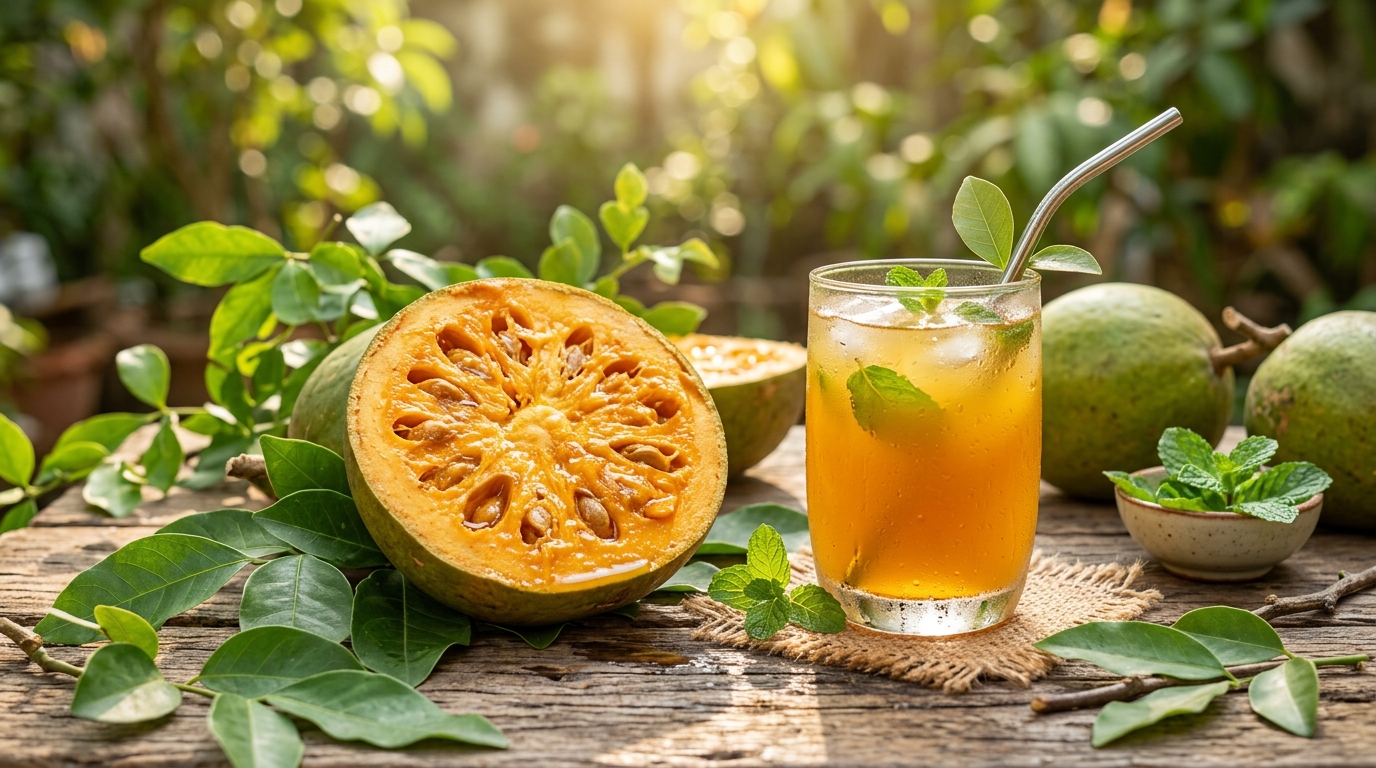
In today’s time, many people struggle with digestion. Problems like acidity, bloating, constipation and weak gut health have become very common. Most people depend on quick relief medicines, but these do not always fix the root cause. Ayurveda has always focused on improving digestion from the base level. One such powerful and traditional fruit is Bel. Many people often search for Bel fruit in English. But this fruit is much more than just a name. It is a natural gut healer that has been used in Ayurveda for centuries. In this article, we will understand Bel fruit in English in detail, including its Ayurvedic importance, benefits, active compounds, simple recipes and some interesting facts.
What is Bel Fruit in English
Bel fruit in English is called wood apple or bael fruit. It comes from India’s native tree Aegle marmelos. The fruit has a hard outer shell and soft, sweet pulp inside. It is commonly consumed during summers in the form of drinks or eaten directly. It is available for a very short duration in summer months of May to April. So, one should take benefits of Bel fruit actively in this short duration.
Ayurvedic Perspective of Bel Fruit
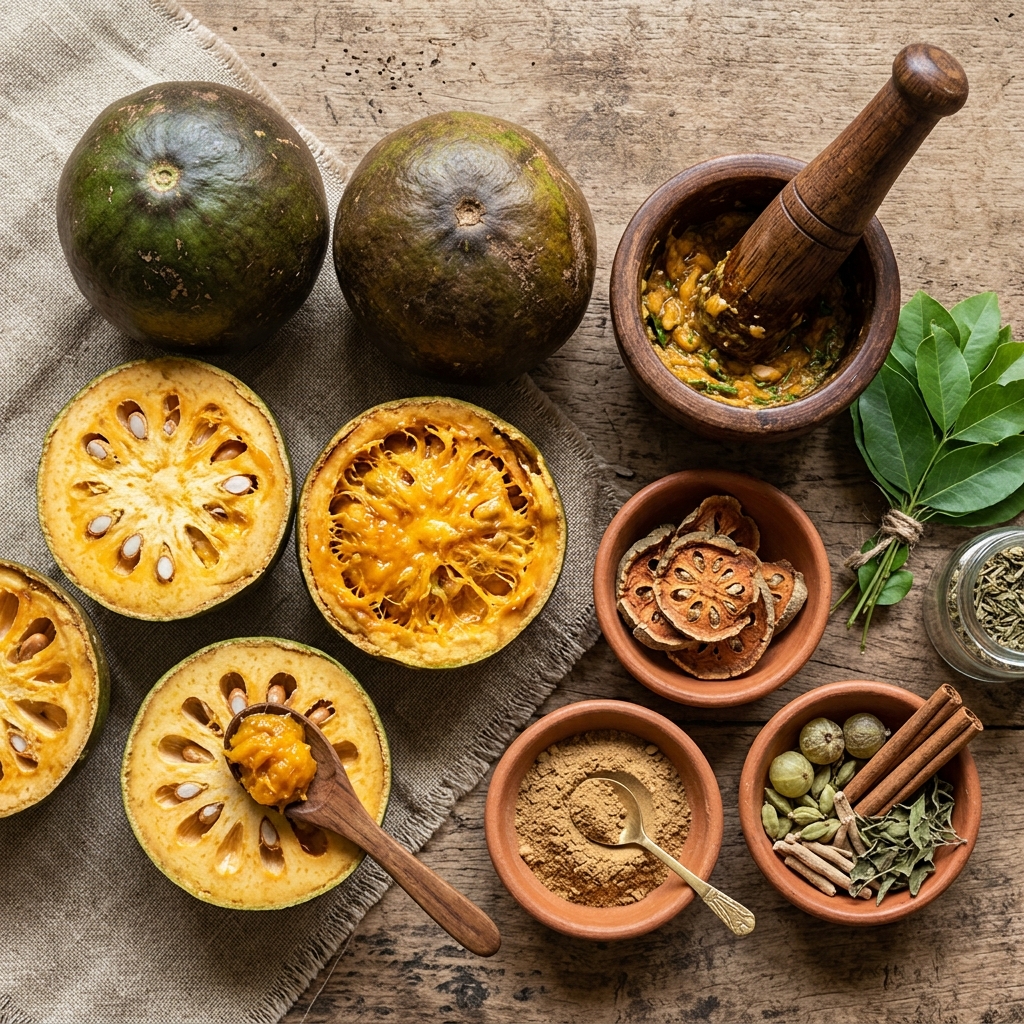
In Ayurveda, Bel is known as Bilva, and it is considered one of the most important fruits for digestive health. Not only the fruit, but its leaves, roots and bark are also used in traditional medicine.
- Rasa (taste) is Kashaya (causes dryness and tightening) and Madhura (sweet, nourishing and strengthening)
- Guna (qualities) are Guru (heavy to digest) and Ruksha (dry in nature)
- Virya (potency) is Ushna (hot in effect, increases digestive fire)
- Vipaka (post digestion effect) is Katu (helps in metabolism)
Bel is known for several important Ayurvedic actions in body:
- Deepana which helps improve digestive fire
- Pachana which helps digest food properly
- Grahi which helps absorb excess fluid in intestines
- Ama pachana which reduces toxins formed due to weak digestion
Interesting Fact- Bel fruit is considered sacred in Indian culture. It is a tree which can survive extreme weather conditions, and every part of this tree has medicinal value.
Benefits of Bel Fruit
- Improves digestion- Bel stimulates digestive enzymes and supports proper breakdown of food. Active compounds like aegeline and alkaloids help improve metabolism and digestion efficiency.
- Controls diarrhea with astringent action- Tannins in Bel provide a binding effect in the intestines. This helps to reduce frequency of stools, improve stool consistency and restore normal bowel movement
- Protects stomach lining and reduces acidity- Flavonoids and antioxidants reduce inflammation in the stomach. This helps to soothe irritation, reduce burning sensation, protect gastric mucosa and reduce bloating and gas.
- Gut Motility- Bel improves gut motility and reduces fermentation in intestines. This leads to less gas formation, reduced bloating and better comfort after meals.
- Supports gut healing in chronic issues- Due to its anti-inflammatory and antimicrobial properties, Bel helps restore gut balance. It is useful in IBS like symptoms, weak gut lining, recurrent digestive discomfort.
A research study published by PubMed mentioned the effectiveness of Bel fruit in colitis infection by reducing mucosal damage, inflammation, diarrhoea and these effects were even more effective as compared to colitis infection medication.
I have also made a detailed video on health benefits of Bel fruit for acidity, diabetics and gastric ulcers. Watch the video to know better about it.
Recipes of Bel Fruit
- Bel Sharbat- Mix Bel pulp with water, jaggery, roasted cumin and a pinch of black salt.
- Bel Digestive Drink- Mix Bel pulp with warm water and a pinch of dry ginger powder.
- Bel Chutney- Blend raw Bel with mint, lemon juice and black salt. This improves appetite and supports digestion.
- Also some Ayurvedic formulations of Bel Fruit are available such as Bilavadi churan which act as a supportive care for IBS, diarrhoea patients.
Ayurvedic formulations can be used only after consulting expert ayurveda consultant. You can take expert advice by booking your consultation by creating your account with Purshveda which has 80+ highly experienced doctors. Purshveda holds 20+ years of experience in ayurveda and has all the ayurvedic medicines formulated by expert doctors.
Who Should Consume Bel Fruit Bel fruit is helpful for:

- People with weak digestion
- Those suffering from diarrhea or IBS like symptoms
- Those facing acidity and bloating
- Those looking for natural gut health support
Precautions
- Avoid excess consumption as it may cause heaviness
- Unripe Bel should be used carefully in case of constipation
- Always prefer ripe fruit for regular use
- Maintain a balanced diet along with it
FAQs
- What is Bel called in English?
Bel fruit in English is commonly known as bael fruit or wood apple. It comes from the tree Aegle marmelos.
- Can we drink Bael juice daily?
Yes, bael juice can be consumed daily in moderate quantities in summers. It helps improve digestion, cool the body and support gut health, but excess intake should be avoided.
- Who should not eat bael fruit?
People with severe constipation, those with very slow digestion should take it in moderation.
Conclusion
Bel fruit in English, also known as wood apple or bael fruit, is a powerful natural remedy for digestive health. Including Bel fruit in your daily routine through simple recipes can help improve gut health naturally and safely. In a time where digestive issues are rising, Bel fruit offers a simple and effective solution rooted in tradition and supported by science.


