



When couples plan pregnancy, most of the focus usually goes to female fertility. But almost 50% infertility cases in India reported male factors as reason for unsuccessful conception. Fertility is not only about producing sperm. It is about sperm quality, hormone balance, sexual health, digestion, stress levels, and overall vitality.
Many people believe that men can become fathers at any age without difficulty. Although men continue producing sperm throughout life, but male fertility gradually declines with age. Sperm count, sperm motility, testosterone levels, libido, and reproductive strength naturally change over time. This is why understanding the male fertility age chart is very important for couples planning pregnancy.
In this article, we will understand the male fertility age chart based on WHO reference values, when to consult a male fertility doctor, how male fertility supplements help, the best foods to increase male fertility, and the Ayurvedic approach to improving reproductive wellness naturally.
What Is Male Fertility?
Male fertility refers to a man’s ability to help achieve pregnancy through healthy sperm production and proper reproductive function. For natural conception and healthy baby, semen should have these qualities:
- Good sperm count
- Proper movement (Strong motility)
- Normal sperm shape (Healthy morphology)
- Good DNA integrity
- Balanced testosterone and reproductive hormones
- Healthy libido and sexual function
When these factors are affected, conception may become difficult. Factors like poor diet, obesity, stress, smoking, alcohol, diabetes, poor sleep, hormonal imbalance, environmental toxins, and age can directly reduce fertility.
Also Read- Kaunch Beej: The Ayurvedic Elixir for Holistic Male Vitality
Male Fertility Age Chart According to WHO Reference Values
For male fertility assessment, the most trusted standard comes from the World Health Organization (WHO) Laboratory Manual for the Examination and Processing of Human Semen. It has listed some important reference ranges for each semen parameter.
Table- WHO Reference Values for Healthy Male Fertility
Parameter | WHO Reference Value |
Semen volume | 1.4 mL or more |
Total sperm number | 39 million per ejaculate or more |
Sperm concentration | 16 million per mL or more |
Progressive motility | 30 percent or more |
Total motility | 42 percent or more |
Normal morphology | 4 percent or more |
| Vitality | 54 percent live sperm or more |
These values help doctors understand whether fertility is normal or needs medical attention.
Male Fertility Age Chart
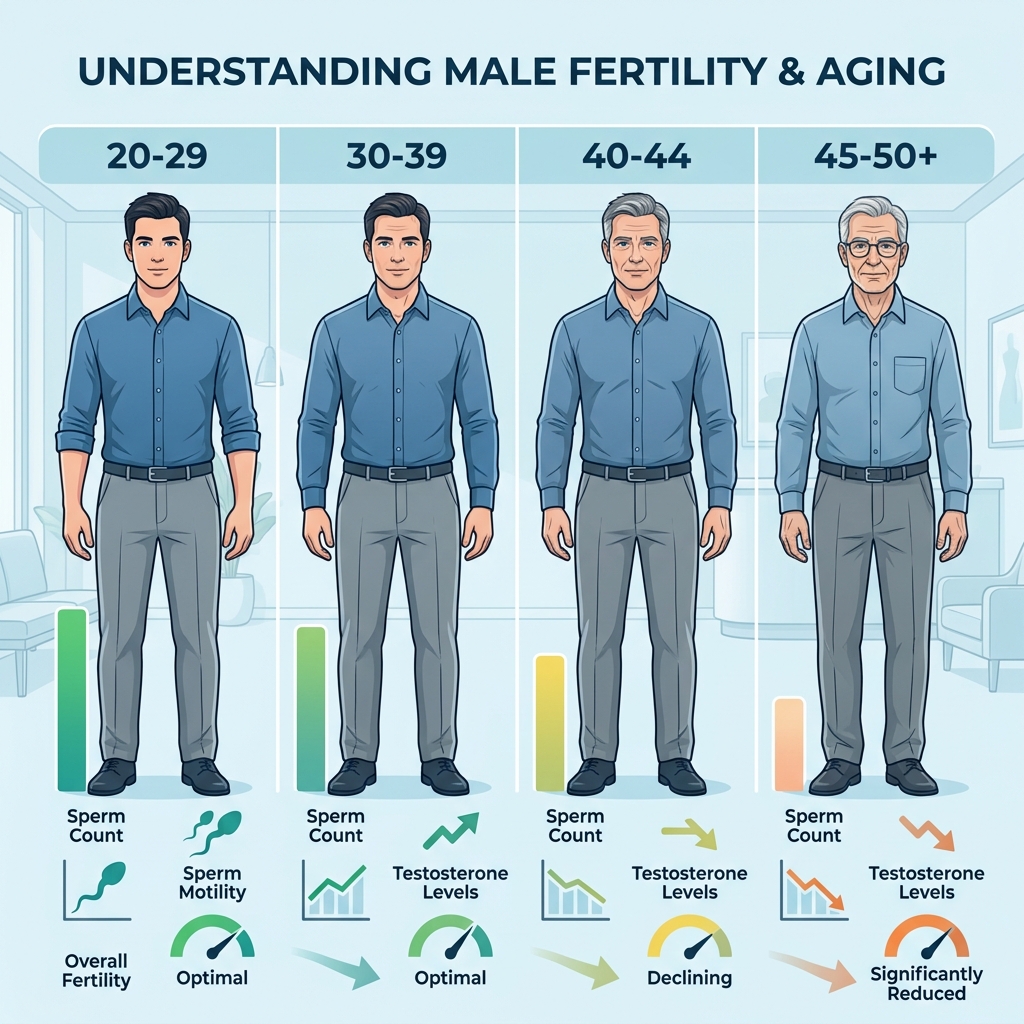
This male fertility age chart shows how Male fertility is affected with age. It shows that fertility does not stop suddenly but it gradually declines, and this decline becomes even more sharp when lifestyle factors are poor.
| Age Group | Fertility Status | Common Changes Seen |
| 20 to 30 years | Peak fertility | High sperm count, strong motility, healthy testosterone |
| 30 to 35 years | Excellent fertility | Stable sperm quality, mild lifestyle related decline may begin |
| 35 to 40 years | Early decline phase | Reduced motility, rising stress related hormonal imbalance |
| 40 to 45 years | Noticeable fertility decline | Lower testosterone, sperm DNA fragmentation increases |
| 45 to 50 years | Reduced fertility | Delayed conception, reduced semen quality |
| Above 50 years | Significant decline | Higher infertility risk and increased genetic concerns |
Signs of Reduced Male Fertility
Many men do not notice fertility issues until conception gets delayed.
Common signs include:
- Low libido
- Erectile dysfunction
- Difficulty maintaining erection
- Reduced semen volume
- Premature ejaculation
- Testicular pain or swelling
- Delayed conception
- Hair loss related to hormonal imbalance
- Fatigue and low energy
- Reduced muscle strength
These symptoms should not be ignored.
When Should You Visit a Male Fertility Doctor?
A male fertility doctor helps identify the root cause of reproductive issues. You should consult a male fertility doctor if:
- Pregnancy is not happening after 12 months of trying
- Age is above 35 and conception is delayed
- There is a history of low sperm count
- There are erection or ejaculation problems
- There is obesity, diabetes, thyroid imbalance, or varicocele
- There is smoking or alcohol dependence
- There was previous surgery involving reproductive organs
Tests like semen analysis, hormone profile, and ultrasound may be advised. Early diagnosis improves treatment success.
Ayurveda Perspective on Male Fertility

In Ayurveda, male fertility is mainly connected with Shukra Dhatu, the reproductive tissue responsible for fertility, vitality, stamina, and healthy progeny. Healthy Shukra Dhatu depends on strong digestion or Agni, proper tissue nourishment, Good sleep and mental peace, Healthy daily routine and Proper stress management. When digestion becomes weak, Ama or toxins accumulate in the body. This affects tissue nourishment and reduces reproductive strength.
Ayurvedic Management for Better Male Fertility
- Deepana and Pachana- Improving digestion is the first step. Herbs like jeera, ajwain, trikatu, and hing help improve metabolism.
- Vajikarana Therapy- There is a specialized Ayurvedic Branch that deals with fertility, which is known as Vajikaran Therapy. The herbs used in this therapy are called Vajikaran Herbs which include Swaran Bhasam, Ashwagandha, Safed Musli, Kaunch Beej, Vidarikand, Kesar, Shilajit and many more. A formulation by Deep Ayurveda known as Vajayu is a Vajikaran Rasayan which consists of 30+ herbs which has proved beneficial to high propertion of males.
- Panchakarma Support- Ayurveda offers Panchkarma therapies such as Abhyanga, Shirodhara which improve nervous control, circulation which are associated factors with male fertility.
Foods to Increase Male Fertility Naturally
As an Ayurvedic nutritionist, patients always ask me about foods to increase male fertility naturally. But the truth is it is not one magical food which can help to boost male fertility naturally but a balance of good diet and lifestyle which gives amazing results. And the right diet and lifestyle needs to be followed consistently for about 3-4 months because it is well known that production of sperm takes about 60-70 days. So, your health habit of today will be reflected in your body after 2-3 months. Hence, patience, discipline and consistency is the key for amazing results.
Some of the foods which boost male fertility naturally are-
- Pumpkin Seeds- Rich in zinc, they support testosterone production and sperm health.
- Walnuts- Provide omega 3 fatty acids that improve sperm motility and morphology.
- Pomegranate- Rich in antioxidants that reduce oxidative stress and support reproductive wellness.
- Eggs- Provide protein, vitamin B12, and healthy fats needed for hormone production.
- Spinach- Contains folate and antioxidants important for healthy sperm formation.
- Dates- Traditionally used for stamina, strength, and reproductive nourishment.
- Amla- Supports antioxidant protection and tissue rejuvenation.
Foods to Avoid for Better Fertility
Avoid:
- Processed food
- Deep fried food
- Excess sugar
- Soft drinks
- Smoking
- Alcohol
- Excess caffeine
- Packaged junk foods
- Late night heavy meals
- Unnecessary gym supplements without supervision
These weaken digestion and disturb Shukra Dhatu.
Lifestyle Practices (Dincharya) for Better Male Fertility

- Wake up early
- Eat freshly cooked warm meals
- Include ghee in moderation
- Sleep before 11 PM
- Practice yoga and pranayama
- Reduce screen stress
- Avoid skipping breakfast
- Exercise regularly
- Maintain healthy body weight
- Avoid smoking and alcohol completely
FAQs
1. What age is men’s sperm most fertile?
Men’s sperm is usually most fertile between the ages of 20 to 30, when sperm count, motility, and testosterone levels are at their best. Fertility may gradually start declining after the mid 30s.
2. At which age sperm production stops?
Sperm production usually does not stop completely with age, unlike female menopause. However, sperm quality and fertility gradually decline, especially after 40 to 50 years.
3. Is a 52 year old man still fertile?
Yes, a 52 year old man can still be fertile because men continue producing sperm throughout life. However, sperm quality, testosterone levels, and chances of conception may be lower compared to younger age.
Final Thoughts
The male fertility age chart helps us understand that fertility changes with age in men. While men remain fertile longer than women, sperm quality, hormone levels, and reproductive strength gradually decline over time. Modern science explains the biological changes, while Ayurveda helps us correct the root cause through digestion, nourishment, lifestyle, and mental balance. Consulting a male fertility doctor at the right time, choosing the right male fertility supplements, and including the right foods to increase male fertility can make a major difference. Fertility is not only about age. It is about how well you care for your body long before planning parenthood.


