


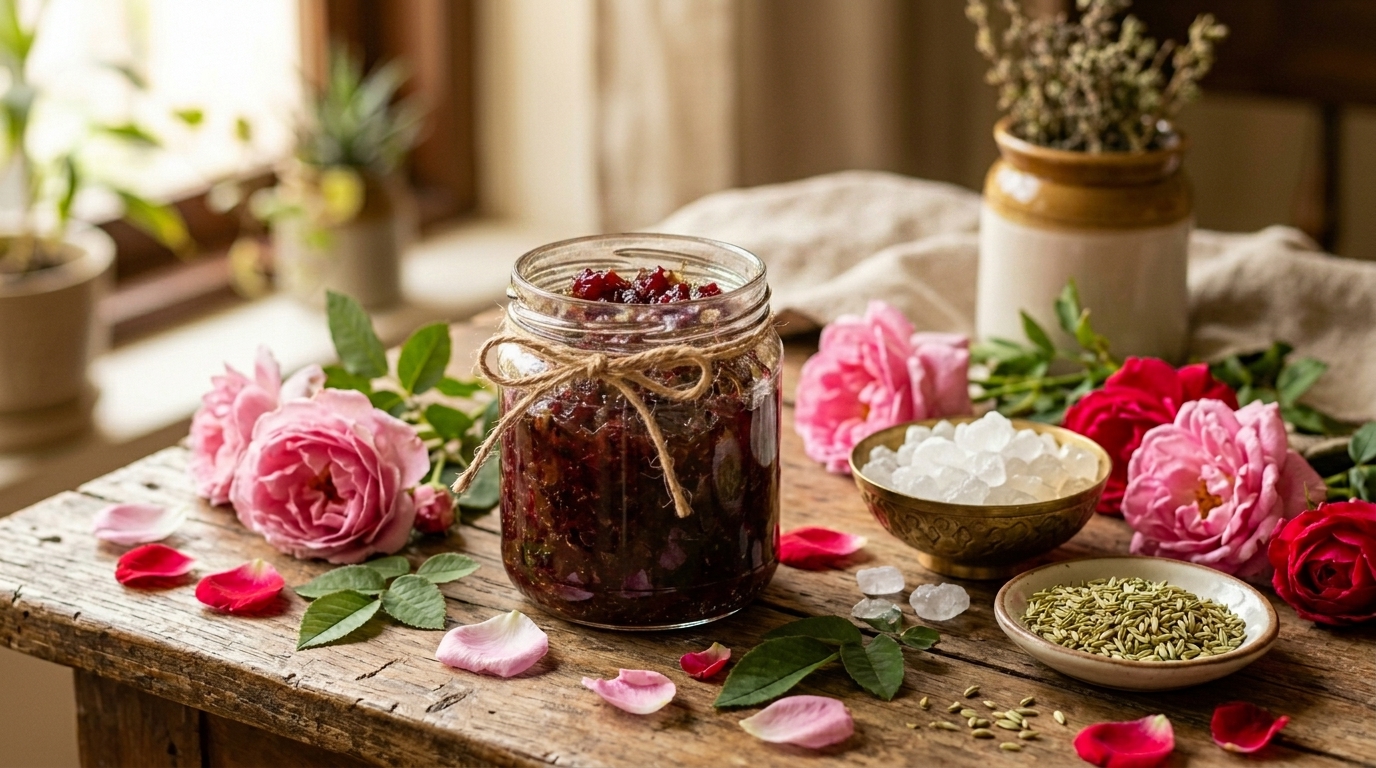
Rose petals have been used in Ayurveda for centuries for their cooling and calming properties. One of the most loved Ayurvedic preparations made from roses is Gulkand. This sweet preserve is not only delicious but is also known for supporting digestion, reducing body heat, improving skin health, and calming the mind. As an Ayurvedic Nutritionist, many patients consult me for complaints like acidity, heat-related issues, constipation, stress, and poor digestion. In these cases, Gulkand can be a simple and natural addition to the diet. The best part is that it can easily be prepared at home using fresh rose petals and natural sweeteners rather than relying on market based chemical loaded Gulkand.
What is Gulkand?
Gulkand is a traditional Ayurvedic preparation made by blending fresh rose petals with natural sweeteners like mishri to create a cooling and nourishing herbal preserve. The word “Gulkand” comes from two Persian words i.e Gul (Rose) and Kand (Sweet).
It is considered one of the best natural cooling tonics in Ayurveda. Traditionally, Damask roses are preferred because of their fragrance and medicinal value. Gulkand has been used for generations as a natural remedy for acidity, constipation, excess body heat, mouth ulcers, fatigue, burning sensation, stress and irritability.
Ayurvedic Perspective of Gulkand
In Ayurveda, rose is known for its:
- Sheetal (cooling) nature
- Madhura rasa (sweet taste)
- Pitta-pacifying properties
Gulkand is mainly beneficial for balancing Pitta dosha, which is associated with heat in the body.
Also Read- What is Bel Fruit in English? Benefits, Recipes and Ayurvedic Perspective
Nutritional Value of Gulkand
The nutritional profile of Gulkand depends on the ingredients used, but generally it contains:
- Natural antioxidants from rose petals
- vitamins A, C, E, and B6, as well as calcium, iron, and magnesium.
- great source of dietary fibre, which helps with digestion.
- Plant compounds like flavonoids
- Natural sugars for quick energy
Benefits of Gulkand
- Acts as a Natural Coolant
- Prevents Sunstroke & Nosebleeds
- Provides Relief From Mouth Ulcers
- Relieves Menstrual Cramps
- Treats Mild Constipation and Enhances Gut Health
- Cures Acidity and Heartburn
- Helps to Relieve Joint Pain
How to Choose Roses for Gulkand
Choosing the right roses is very important.
Use:
- Fresh, fragrant pink roses
- Organic or pesticide-free roses
- Desi roses if available
Avoid:
- Artificially colored flowers
- Chemically sprayed roses
- Wilted petals
Fresh petals provide better aroma, taste, and medicinal properties.
Traditional Ayurvedic Gulkand Recipe
Ingredients
To prepare an authentic Ayurvedic Gulkand Recipe, you will need:
- 2 cups fresh pink or Damask rose petals
- 1 cup mishri powder
- 1 teaspoon cardamom powder (optional)
- 1 teaspoon fennel seeds (optional)
- A clean glass jar
Step-by-Step Gulkand Recipe
Step 1: Clean the Rose Petals
Wash the rose petals gently under clean water to remove dust or impurities. Spread them on a cloth and allow them to dry completely. Excess moisture may spoil the Gulkand.
Step 2: Chop the Petals
Finely chop the rose petals using a knife or crush them lightly with your hands. This helps release their natural aroma and juices.
Step 3: Layer the Ingredients
Take a clean glass jar and add:
- One layer of rose petals
- One layer of mishri or sugar
Repeat the process until all ingredients are used. Add cardamom or fennel seeds if desired.
Step 4: Sun-Cooking Process
Close the jar tightly and place it in sunlight for 7–15 days.
Every day:
- Stir the mixture using a clean spoon
- Keep the jar in sunlight for a few hours
Slow sunlight exposure naturally helps in the preparation process and improves flavor and texture.
Step 5: Store Properly
Once the petals become soft and jam-like, your Gulkand is ready. Store it in a cool and dry place. You can refrigerate it for a longer shelf life.
Dosage of Gulkand
- Adults- 1–2 teaspoons once or twice daily
- Children- ½–1 teaspoon daily
Best Time to Take Gulkand
You can consume Gulkand:
- After meals
- With milk at night
- In the morning during summer
For constipation and acidity, many people prefer taking it at bedtime with cool milk.
Ways to Consume Gulkand
1. With Milk- Mix 1 teaspoon Gulkand in cold or lukewarm milk. This is one of the most popular traditional methods.
2. In Lassi- Add Gulkand to homemade lassi for a refreshing summer drink.
3. As a Spread- Use it as a natural sweet spread on roti or bread occasionally.
4. In Desserts- You can add Gulkand to:
- Falooda
- Ice cream
- Kheer
- Smoothies
5. With Fennel Seeds- A small amount of Gulkand with fennel seeds may help freshen breath and support digestion after meals.
Who Should Avoid Excess Gulkand?
Although Gulkand is natural, excessive consumption may not suit everyone.
Use cautiously if:
- You have diabetes
- You are following a low-sugar diet
- You experience frequent loose stools
Moderation is always important.
Ayurvedic Tips to Enhance Gulkand Benefits
To improve the effectiveness of Gulkand:
- Drink enough water
- Avoid excessive spicy and fried foods
- Include cooling foods like cucumber and coconut water
- Maintain healthy digestion
- Follow a balanced daily routine
Ayurveda believes that proper lifestyle habits help herbs and natural foods work more effectively.
Difference Between Homemade and Market Gulkand
Homemade Gulkand
- Fresh ingredients
- No preservatives
- Better aroma
- More authentic preparation
Market Gulkand
- Convenient
- Longer shelf life
- May contain preservatives or artificial flavoring
Reading ingredient labels is important before buying packaged products.
Final Thoughts
Preparing your own Gulkand Recipe at home allows you to enjoy fresh, preservative-free goodness while staying connected to traditional wellness practices. The traditional Ayurvedic Gulkand Recipe made with sun-cooked rose petals is especially valued for its natural cooling benefits. When consumed in moderation along with a balanced lifestyle and healthy diet, Gulkand can become a refreshing addition to your daily wellness routine.


